Is Dallas-Fort Worth a Buyer’s Market in 2026?
Updated: September 2026
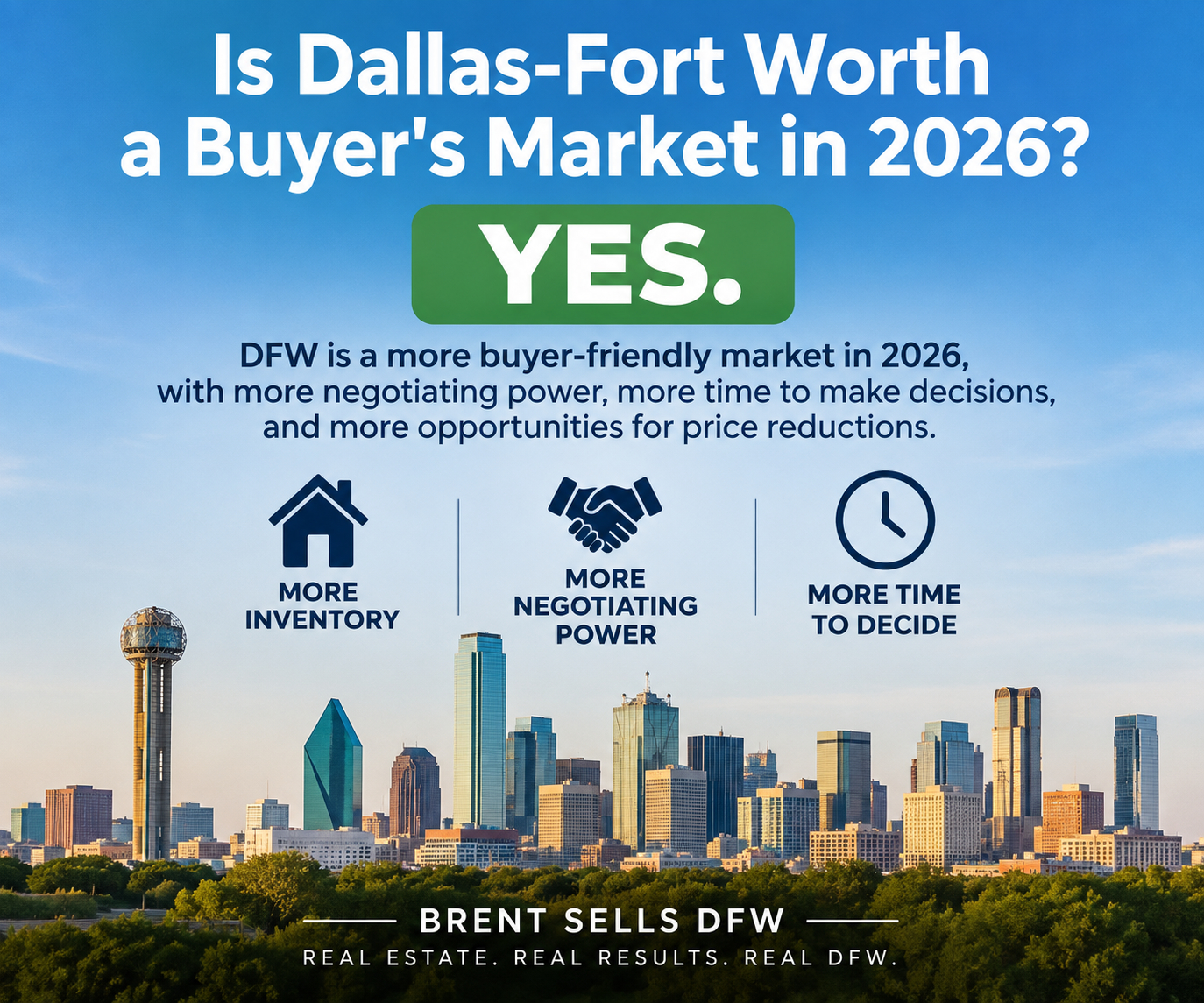
Short answer: Yes, Dallas-Fort Worth has shifted into buyer-favorable territory in 2026, although conditions vary by city, neighborhood, price range, and property type. Buyers generally have more negotiating power, more time to make decisions, and a better chance of securing price reductions or seller concessions than they did during the highly competitive market of 2021–2022. Here’s what’s actually happening, and what it means depending on which side of the transaction you’re on.
What's Actually Changed
The numbers tell a clear story. In August 2026, approximately 27.5% of Dallas-Fort Worth listings had experienced a price reduction, compared with 20.4% nationally, according to Realtor.com. The median home spent approximately 58 days on the market. Redfin has also identified both Dallas and Fort Worth as buyer’s markets based on the relationship between active sellers and buyers — in its July 2026 analysis, Redfin reported substantially more sellers than buyers in both markets. (Realtor.com Market Data) (Redfin Data Center)
The DFW median home price sits around $415,000 as of May 2026 — but that headline number hides the real shift happening underneath it. Home values across most DFW counties fell roughly 5% in 2025, and the S&P Cotality Case-Shiller index, which tracks long-term repeat-sale values, placed Dallas among the weakest-performing major metros in the country over the past year. (S&P CoreLogic Case-Shiller Index)
Maybe the most telling stat: nearly half of Dallas sellers — 47.3% — reduced their asking price at least once in February 2026 alone. That’s not a minor market correction; that’s a broad signal that sellers who priced based on 2021–2022 conditions are finding a very different market in 2026.
Inventory has grown significantly too — DFW has seen one of the largest increases in active listings among the nation’s 50 largest metro areas over the past two years. More recently, however, inventory has tightened somewhat: Realtor.com reported approximately 29,549 active listings across Dallas-Fort Worth in August 2026, down 4.4% from August 2025. So today’s market isn’t simply a story of inventory continuing to climb — buyers are benefiting from a combination of longer marketing times, price reductions, affordability pressures, competition from new construction, and sellers who are often more willing to negotiate.
Why This Is Happening
A few forces are driving this shift at once:
- Elevated mortgage rates (currently in the mid-6% range) have priced some buyers out and slowed the pace of transactions compared to the low-rate years.
- A wave of new construction across DFW has meaningfully expanded supply, especially in the outer suburbs.
- Affordability pressure — rising property taxes and insurance costs, layered on top of home prices that roughly doubled over the past decade, have kept a real share of would-be buyers on the sidelines.
Interestingly, the actual monthly payment burden relative to income has eased slightly — dropping from about 26.7% of median income a year ago to roughly 25.3% today — but many buyers still feel priced out at the kitchen-table level, especially when property taxes and insurance are factored in alongside the mortgage payment itself.
What This Means If You're Buying
This is arguably the best negotiating position DFW buyers have had since before 2020:
More Room to Negotiate
With inventory elevated and homes sitting longer, sellers are far more willing to accept offers below asking than they were a few years ago.
Contingencies Are Back
During the frenzy years, waiving contingencies was often necessary to compete. That's far less true now — buyers can generally include standard protections in their offers again.
Concessions Are Common
Repair credits, closing cost help, and rate buydowns are all more available now than in a tight seller's market.
Less Pressure, More Time
You're less likely to be forced into a same-day decision. That said, "more time" doesn't mean "no urgency" — well-priced, well-maintained homes are still moving reasonably fast.
If you've been waiting for a better window to buy, the current environment — more selection, more negotiating leverage, and rates that are expected to hold roughly steady rather than spike — is worth serious consideration rather than continuing to wait indefinitely.
What This Means If You're Selling
The market hasn't collapsed, but it does require a different strategy than it did a few years ago:
- Pricing accurately from day one matters more than ever. Overpriced homes are sitting 60–105+ days on market right now — and homes that sit tend to need price cuts eventually anyway, often ending up at a lower final price than if they'd been priced correctly from the start.
- Presentation and condition carry more weight. In a competitive seller's market, buyers overlooked flaws to win a bidding war. In today's market, they don't have to — homes that show well and are priced to current comps move; homes that don't, sit.
- Sellers who bought in 2020 or earlier are still in a strong position. In many DFW submarkets, home values remain roughly $100,000 higher than they were in 2020, meaning long-term homeowners still have substantial equity to work with even in today's softer conditions.
- Being realistic about comps matters more than ever. Pulling accurate, current comparable sales — not 2022 pricing — is essential to setting a price that actually moves your home rather than testing the market and cutting later.
What This Looks Like County by County
Conditions aren't identical everywhere — some DFW counties have shifted further into buyer-favorable territory than others, and local school districts, new construction volume, and inventory levels all play a role. If you're deciding between areas, or trying to understand how competitive a specific neighborhood currently is, that's worth a direct conversation rather than relying on metro-wide averages, since the numbers can vary meaningfully even between neighboring cities.
Bottom Line
DFW has moved from a frenzied seller's market into a genuinely more balanced environment — not a collapse, but a real recalibration. For buyers, this is one of the strongest negotiating positions the market has offered in years. For sellers, it means the days of "price it high and let the bidding war sort it out" are over, and accurate pricing plus real prep work now make the difference between a home that sells and one that sits. Either way, understanding exactly where your specific situation stands in this shifting market is the first step to making a good decision.
Ready to Navigate the Market?
Whether you're thinking about buying, selling, or just want to understand what this shift means for your specific neighborhood, reach out — I'm happy to walk through the current numbers with you.
Brent Reiter
Brent Sells DFW
brent@brentsellsdfw.com | brentsellsdfw.com
*Market data in this post reflects DFW-wide conditions as of mid-2026 from sources including Zillow, S&P Cotality Case-Shiller, and UTA Real Estate Center analysis. Local conditions vary by county and neighborhood — contact me for current data specific to your area.