What to Know Before Moving to Dallas, TX
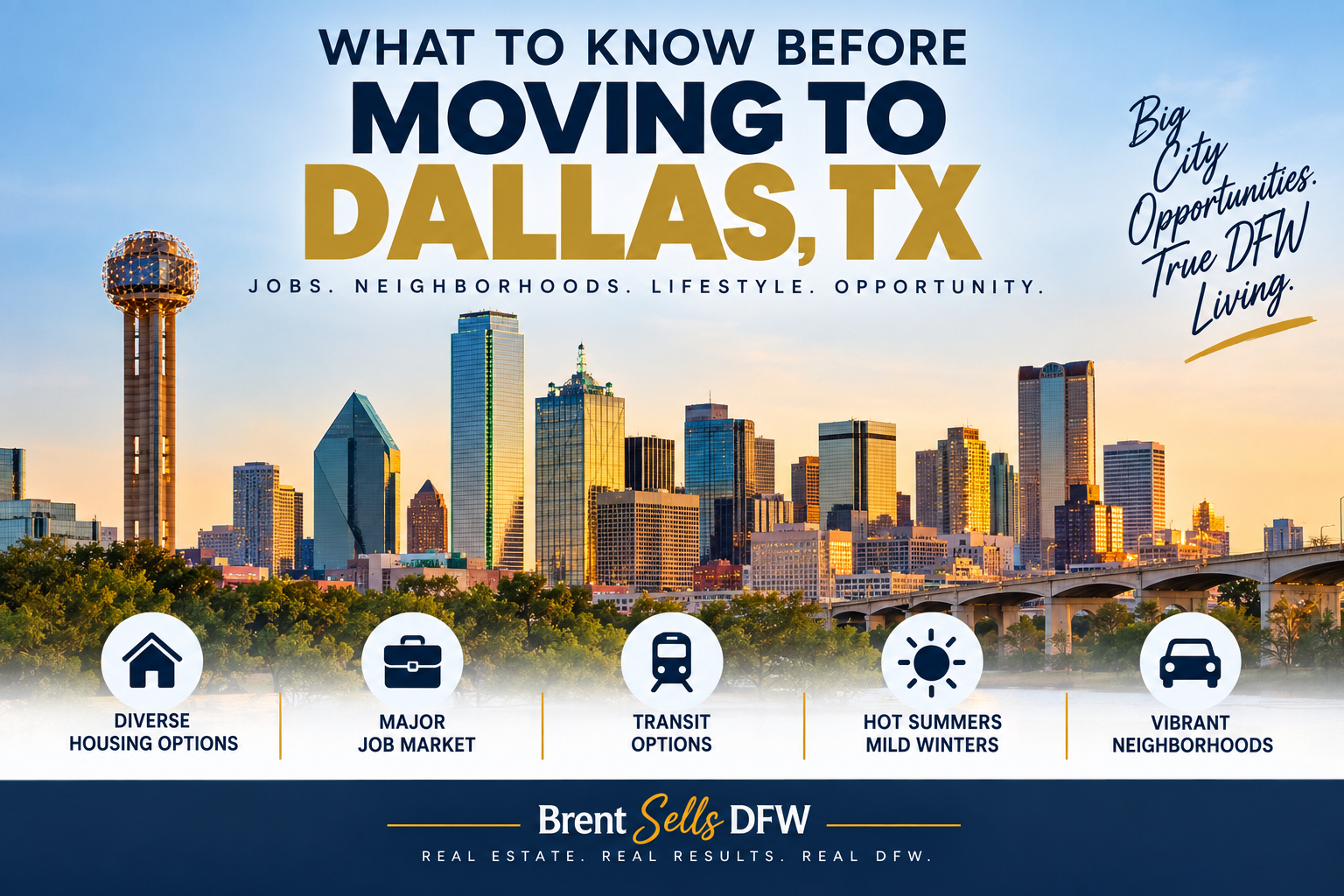
Short answer: Dallas offers a major employment center, urban amenities, diverse housing options and more public-transit access than many surrounding DFW communities—but housing costs can be higher than in other parts of North Texas. Before moving, pay particular attention to property taxes, commute times, school attendance boundaries, homeowners insurance, summer heat, and property-specific concerns such as foundation condition and flood risk.
What Is It Like Living in Dallas?
Dallas is the economic anchor of the DFW metroplex, and it feels like it. The city has a more corporate, cosmopolitan identity than Fort Worth, with higher-end shopping and dining, a denser skyline and a faster overall pace.
You'll find everything from high-rise urban living in Uptown and Downtown to established single-family neighborhoods and newer development extending into the surrounding suburbs. Dallas also has more transit infrastructure than many parts of North Texas, including DART rail, which can provide an alternative to driving depending on where you live and work.
Dallas generally has a more corporate, cosmopolitan feel than Fort Worth, while still providing access to the jobs, entertainment, airports and amenities of a major metropolitan area.
How Much Does It Cost to Live in Dallas?
Housing costs vary considerably depending on location, age and condition of the home, lot size, property type and whether you're considering new construction or resale.
As a general range, buyers can still find some entry-level and older homes in Dallas in the upper $200Ks into the $300Ks, while established close-in neighborhoods such as Lakewood, Lake Highlands, East Dallas and parts of Oak Cliff can run considerably higher. Premium areas such as Highland Park, University Park and Preston Hollow can reach well above $1 million.
Prices vary significantly by neighborhood, condition and property type. Texas has no individual state income tax, but property taxes can represent a significant portion of your monthly housing expense. Homeowners insurance should also be part of the conversation. North Texas is exposed to hail, wind and severe storms, so insurance costs can meaningfully affect the total monthly cost of owning a home.
The important number isn't simply the purchase price—it's your total monthly housing cost.
Is Dallas More Expensive Than Fort Worth?
Generally, Dallas housing tends to be more expensive than Fort Worth housing, although the size of the difference depends heavily on the neighborhoods and properties being compared.
Dallas also offers access to one of the country's largest employment centers. The broader Dallas-Fort Worth region is home to 24 Fortune 500 headquarters and has a diverse employment base across industries including finance, technology, telecommunications, healthcare, transportation and professional services.
If affordability is a priority, compare individual properties, taxes, insurance, commute costs and housing inventory rather than relying solely on citywide averages. Some Dallas neighborhoods may be comparable to Fort Worth pricing, while some Fort Worth neighborhoods can be considerably more expensive than the Dallas average.
What Is the Weather Like in Dallas?
Summers are hot and long—expect temperatures in the 90s and periods of 100°F+ heat during the summer months. Winters are generally much milder, although North Texas occasionally experiences freezing temperatures, ice and winter storms.
Severe thunderstorms, high winds and hail are also part of living in North Texas. If you're buying a home, roof condition, insurance coverage and previous storm damage are worth investigating.
Do You Need a Car in Dallas?
For most people, yes—although Dallas offers more public-transit options than many surrounding DFW communities.
Dallas has DART rail and bus service, and certain neighborhoods offer greater walkability than much of North Texas. That said, major routes including I-35E, I-30, US-75 and LBJ Freeway can experience significant congestion during peak commuting periods, and many jobs and daily errands still require driving.
When choosing a home, don't look only at the number of miles between the property and your workplace. Drive the route during the hours you'll actually commute whenever possible. Ten miles in one part of DFW can be a very different commute from ten miles somewhere else.
What Areas of Dallas Should I Know About?
Dallas isn't one uniform housing market. Different parts of the city can offer very different housing styles, locations and amenities.
| Area | What It Offers |
|---|---|
| Uptown/Downtown | High-rise and urban living, restaurants, entertainment and proximity to downtown employers |
| Highland Park/University Park | Premium established communities and some of the highest home values in the area |
| Lakewood/Lake Highlands | Established neighborhoods east and northeast of downtown |
| Oak Cliff | Mix of historic homes, established neighborhoods and revitalized commercial areas |
| Preston Hollow | Upscale homes, larger lots and access to North Dallas employment corridors |
| North Dallas/Far North Dallas | More suburban-style housing and access to major employment areas |
The right area depends much more on your budget, commute, preferred type of home and lifestyle than on any single list of "best neighborhoods."
What Suburbs Near Dallas Should I Consider?
Don't automatically limit your search to Dallas city limits.
Depending on where you work and what you're looking for, surrounding communities such as Plano, Frisco, McKinney, Allen, Richardson, Garland, Mesquite, Irving and Grand Prairie may also be worth considering.
Some buyers prioritize proximity to DFW Airport or a particular employment corridor. Others want newer construction, a larger yard, a particular type of community or a more suburban environment.
Many people who initially tell me they want to live "in Dallas" ultimately discover that a nearby suburb better matches their commute, budget, home preferences or lifestyle.
What Are Property Taxes Like in Dallas?
There isn't one universal "Dallas property-tax rate." As a general planning benchmark, the combined rates from the applicable city, county, school district and other taxing entities can often fall around 2.0%–2.7%, depending on the property's location.
For example, a $450,000 taxable value at a combined 2.3% rate would equal approximately $10,350 per year before accounting for applicable exemptions. The actual bill depends on the property's taxable value, exemptions and the specific taxing jurisdictions associated with the address. That's why two similarly priced homes can have noticeably different property-tax bills.
If you're financing the purchase, property taxes may be included in your monthly escrow payment, making them an important part of determining what you can comfortably afford.
What Should Buyers Know About Dallas Schools?
School attendance zones are address-specific and don't necessarily follow city or neighborhood boundaries.
A Dallas mailing address doesn't automatically tell you which schools serve a property, and attendance boundaries can change. Texas schools are evaluated through the state's accountability system, but buyers should research the individual campuses and districts that matter to them. If schools are important to your housing decision, verify current attendance zones directly with the applicable school district rather than relying solely on information displayed on a real estate listing or third-party website.
What Should I Know Before Buying a House in Dallas?
North Texas has several property issues that buyers—especially those relocating from another part of the country—may not immediately think about.
- Foundation movement: Expansive soils are common throughout North Texas, so signs of foundation movement deserve attention.
- Roofs and hail: Severe storms can damage roofs. Ask about roof age, repairs and previous insurance claims when appropriate.
- Homeowners insurance: Get quotes early enough to understand how the premium will affect your monthly housing expense.
- Flood risk: Don't assume a property is outside a potential flood area simply because flooding isn't obvious when you visit.
- Property taxes: Compare the specific property's taxes rather than relying on a citywide estimate.
- HOAs and special assessments: Depending on the community, HOA dues or other assessments may affect your total housing cost.
Regardless of whether you're buying a newer or older property, a thorough home inspection can help identify issues before you complete the purchase.
Is There a Lot of New Construction Near Dallas?
Yes—particularly in the surrounding suburbs and growth corridors.
While infill and redevelopment continue within Dallas itself, much of the area's large-scale new-home construction is concentrated in suburban communities throughout the broader DFW market, including areas north of Dallas such as Frisco, McKinney, Prosper and Celina. New construction can also introduce financial considerations that differ from resale homes. Builders may offer rate buydowns, closing-cost credits or design-center incentives, particularly on certain inventory.
Another consideration is property taxes. With some newly built homes, an initial tax bill may reflect primarily the land value before the completed improvement is added to the appraisal. Buyers should understand what the projected tax bill could look like once the completed home is fully reflected.
The incentive shouldn't be the only reason you choose a home. Compare the price, monthly payment, taxes, location, builder incentives and long-term fit of the property.
Should I Rent or Buy When Moving to Dallas?
There's no universal answer.
Renting first can give someone relocating to DFW time to learn the area before committing to a particular location. Buying may make more sense for someone who already understands where they want to live, plans to stay for several years and is financially prepared for homeownership.
Compare the total monthly costs, upfront cash required, expected length of stay and flexibility you need—not simply whether the mortgage payment appears similar to rent.
Frequently Asked Questions About Moving to Dallas
Is Dallas expensive to live in?
Dallas offers housing across a wide range of price points, but housing can be more expensive than in some other parts of North Texas. Buyers should consider more than the home's purchase price. Property taxes, homeowners insurance, utilities, transportation and maintenance all contribute to the actual cost of living in a home.
Is Dallas more expensive than Fort Worth?
Generally, Dallas housing tends to cost more than Fort Worth housing, although the difference varies considerably by neighborhood and property type. Compare individual home prices, property taxes, insurance and commuting costs rather than relying solely on citywide averages.
Do you need a car in Dallas?
Most residents will find having a vehicle convenient, although Dallas has more transit options than many other parts of North Texas. Whether you can rely less on a car depends heavily on where you live, work and spend most of your time.
What are property taxes like in Dallas?
Combined property-tax rates can often fall around 2.0%–2.7%, depending on the property's location and applicable taxing entities. The actual bill depends on taxable value, exemptions and the specific jurisdictions associated with the property.
What should I know before buying a house in Dallas?
Look beyond the asking price. Property taxes, homeowners insurance, foundation condition, roof age, flood risk, HOA costs, commute time and school attendance boundaries can all affect whether a particular home makes sense for you.
Is it better to rent or buy when moving to Dallas?
It depends on how long you expect to stay, your finances and how certain you are about where you want to live. Renting provides greater flexibility, while buying provides the opportunity to build equity. Compare the complete costs and your individual circumstances before deciding.
Thinking About Moving to Dallas?
Choosing where to live in Dallas involves more than finding a house you like. Commute times, property taxes, school attendance boundaries, neighborhood age, new construction, insurance costs and lifestyle can vary considerably across the area.
If you're considering a move to Dallas or the surrounding DFW area, tell me what you're looking for. I can help you narrow down the areas and homes that fit your priorities.
Brent Reiter, REALTOR® | Brent Sells DFW
Real Estate. Real Results. Real DFW.
Serving Dallas-Fort Worth.
Have Questions? Let's Talk.
Fill out the form below and I'll get back to you shortly. No pressure, just honest guidance.