What to Know Before Moving to Fort Worth, TX
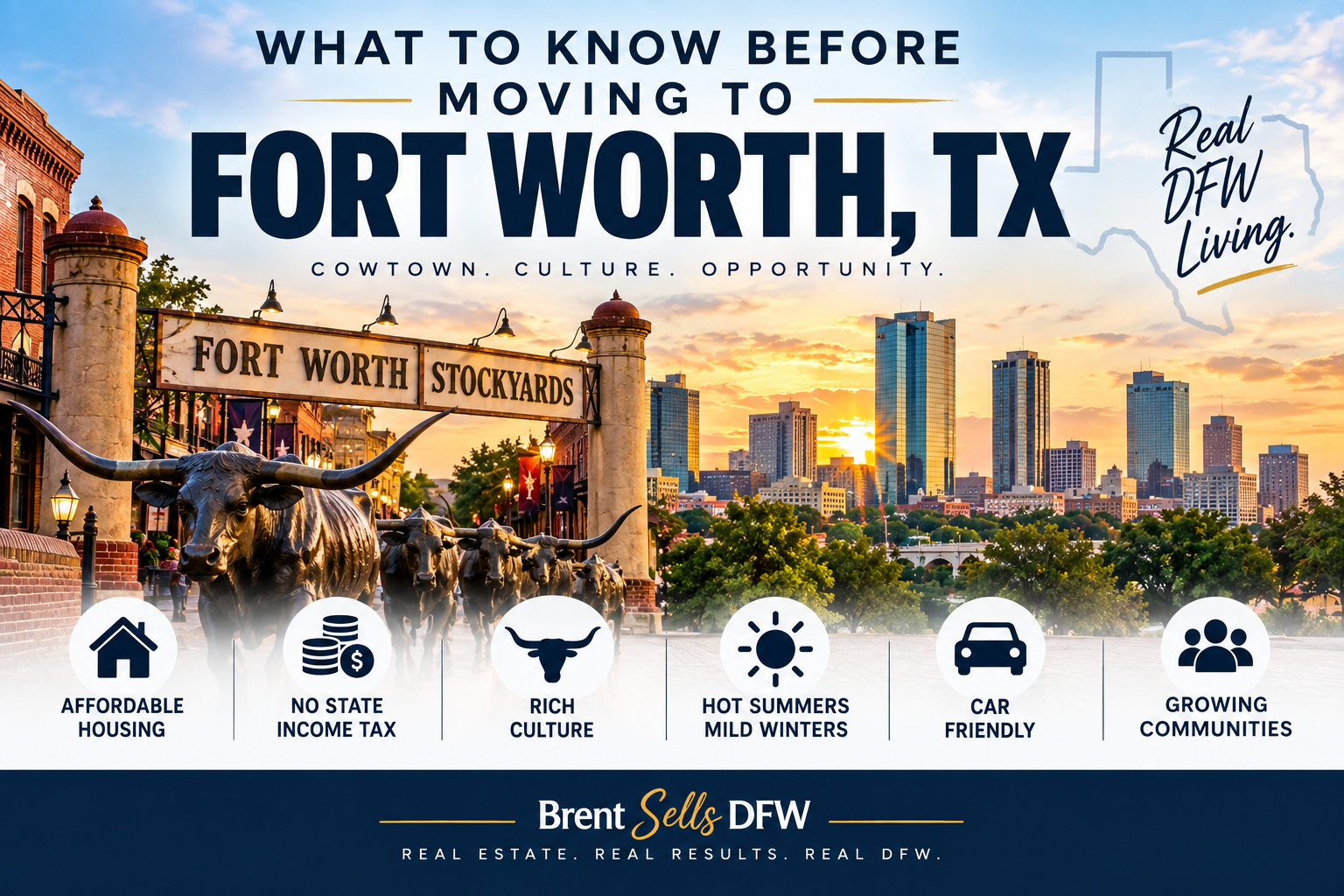
Short answer: Fort Worth combines relatively affordable housing, no Texas individual state income tax, a strong local culture, and housing options ranging from urban neighborhoods to new construction and homes with more land. Before moving, pay particular attention to property taxes, commute times, school attendance boundaries, homeowners insurance, summer heat, and property-specific issues such as foundation and flood risk.
What Is It Like Living in Fort Worth?
Fort Worth is part of the larger Dallas-Fort Worth metroplex, but it has an identity all its own.
The city blends its well-known Western heritage — the Stockyards, rodeo, live music and "Cowtown" personality — with a strong restaurant, museum and arts scene. You'll find urban neighborhoods close to downtown, established residential areas, rapidly growing suburban communities and new construction spreading in several directions.
Fort Worth generally has a more laid-back feel than Dallas, while still providing access to the jobs, entertainment, airports and amenities of a major metropolitan area.
How Much Does It Cost to Live in Fort Worth?
Housing costs vary considerably depending on where you live, the age and condition of the home, lot size and whether you're looking at new construction or resale.
As a general range: starter homes in outer suburbs or older neighborhoods run roughly $200K–$260K, while established close-in neighborhoods (TCU, Mira Vista, Overton Park) run $350K–$600K+. New construction in growth corridors like Aledo, Willow Park and Cresson typically lands between $300K–$500K depending on lot size and builder. Rent for a typical 2-bedroom apartment generally runs $1,300–$1,700/month.
Texas has no individual state income tax, but property taxes can represent a significant portion of your monthly housing expense — more on that below. Homeowners insurance should also be part of the conversation. North Texas is exposed to hail, wind and severe storms, so insurance costs can meaningfully affect the total monthly cost of owning a home.
The important number isn't simply the purchase price — it's your total monthly housing cost.
Is Fort Worth Cheaper Than Dallas?
It depends heavily on which neighborhoods and properties you're comparing.
Fort Worth has historically offered buyers a variety of housing options at different price points, but prices can vary substantially within both Fort Worth and Dallas. Comparable starter homes in Dallas often start $50K–$100K higher than in Fort Worth, and Dallas's job market leans more corporate/finance while Fort Worth's leans aerospace, defense, logistics and healthcare.
A home near downtown Fort Worth shouldn't necessarily be compared with a home in an outer Dallas suburb based solely on citywide median prices. If affordability is important, compare individual communities, property taxes, insurance, commute costs and housing inventory rather than relying solely on a Fort Worth-versus-Dallas average.
What Is the Weather Like in Fort Worth?
Summers are hot and long — expect 95–100°F+ from June through September. Winters are generally much milder, although North Texas occasionally experiences freezing temperatures, ice and winter storms.
Severe thunderstorms, high winds and hail are also part of living in North Texas. If you're buying a home, roof condition, insurance coverage and previous storm damage are worth investigating.
Do You Need a Car in Fort Worth?
For most people, yes.
Fort Worth covers a large geographic area, and many residents commute between Fort Worth and surrounding communities. Major routes including I-30, I-35W and Loop 820 can experience significant congestion during peak commuting periods.
Public transportation is available, but whether it works for you depends heavily on where you live and work.
When choosing a home, don't look only at the number of miles between the property and your workplace. Drive the route during the hours you'll actually commute whenever possible. Ten miles in one part of DFW can be a very different commute from ten miles somewhere else.
What Areas of Fort Worth Should I Know About?
Fort Worth isn't one uniform housing market. Different parts of the city can offer very different experiences.
| Area | What It Offers |
|---|---|
| Downtown/Sundance Square | Urban environment close to restaurants, entertainment and downtown employers |
| Cultural District | Museums (Kimbell, Modern Art Museum, Amon Carter), entertainment, central-city amenities |
| Near Southside | Restaurants, entertainment, proximity to downtown and the medical district |
| TCU/Westcliff | Established residential areas surrounding Texas Christian University |
| Arlington Heights/Ridglea | Established west-side neighborhoods with convenient access to central-city destinations |
| North and Far North Fort Worth | Substantial residential growth, newer neighborhoods, new-construction options |
The right area depends much more on your budget, commute, preferred type of home and lifestyle than on any single list of "best neighborhoods."
What Suburbs Near Fort Worth Should I Consider?
Don't automatically limit your search to the Fort Worth city limits.
Depending on where you work and what you're looking for, surrounding communities such as North Richland Hills, Hurst, Euless, Bedford, Keller, Haslet, Benbrook, Aledo and Burleson may also be worth considering.
Some buyers prioritize proximity to Dallas or DFW Airport. Others want newer construction, a larger yard, more land or easier access to a particular employment corridor.
Many people who initially tell me they want to live "in Fort Worth" ultimately discover that a nearby community better matches their commute, budget, home preferences or lifestyle.
What Are Property Taxes Like in Fort Worth?
There isn't one universal "Fort Worth property-tax rate," but as a planning benchmark, combined city/county/school/special-district rates in Tarrant County typically land in the 2.0–2.5% range of assessed value annually. On a $350,000 home at 2.2%, that's roughly $7,700/year, or about $642/month if escrowed into your mortgage payment.
A property's exact tax bill depends on the county, city, school district, exemptions and other taxing entities associated with that specific address — that's why two similarly priced homes can have noticeably different bills. If you qualify for a homestead exemption, file it after closing (it's not automatic); it reduces your taxable value and caps annual assessed-value increases at 10%. Over-65, disability and veteran exemptions may apply as well, and you can protest your assessed value each year through the Tarrant Appraisal District if it seems too high relative to comps.
If you're financing the purchase, those taxes become part of your monthly escrow payment, making them an important part of determining what you can comfortably afford. Compare the actual tax information for properties you're considering rather than estimating your payment from the purchase price alone.
What Should Buyers Know About Fort Worth Schools?
School attendance zones are address-specific and don't necessarily follow city or neighborhood boundaries.
A Fort Worth mailing address doesn't automatically tell you which schools serve the property, and boundaries can change. If schools are important to your housing decision, verify current attendance zones directly with the applicable school district rather than relying solely on information displayed on a real estate listing or third-party website.
What Should I Know Before Buying a House in Fort Worth?
North Texas has several property issues that buyers — especially those relocating from another part of the country — may not immediately think about.
- Foundation movement: Expansive soils are common throughout North Texas, so signs of foundation movement deserve attention.
- Roofs and hail: Severe storms can damage roofs. Ask about roof age, repairs and previous insurance claims when appropriate.
- Homeowners insurance: Get quotes early enough to understand how the premium will affect your monthly housing expense.
- Flood risk: Don't assume a property is outside a potential flood area simply because flooding isn't obvious when you visit.
- Property taxes: Compare the specific property's taxes rather than relying on a citywide estimate.
- HOAs and special assessments: Depending on the community, there may be HOA dues or other assessments that affect your total housing cost.
Regardless of whether you're buying a newer or older property, a thorough home inspection can help identify issues before you complete the purchase.
Is There a Lot of New Construction Around Fort Worth?
Yes. New construction is a significant part of the housing market throughout many areas surrounding Fort Worth, generally starting in the low-to-mid $300Ks for entry-level production homes and climbing past $600K for larger lots, custom builders or premium communities.
Growth continues north, west and south of the city, with communities ranging from traditional subdivisions to larger master-planned developments. New construction can also introduce financial considerations that differ from resale homes — builders may offer rate buydowns, closing-cost credits or design-center incentives, particularly when they're trying to move completed inventory. Also budget for the year-two tax jump: new builds are often taxed on land value only for the first partial year, then reassessed at full value (land + structure) the following year.
The incentive shouldn't be the only reason you choose a home, though. Compare the price, monthly payment, taxes, location, builder incentives and long-term fit of the property.
Should I Rent or Buy When Moving to Fort Worth?
There's no universal answer.
Renting first can give someone relocating to DFW time to learn the area before committing to a neighborhood. Buying may make more sense for someone who already understands where they want to live, plans to stay for several years and is financially prepared for homeownership.
Compare the total monthly costs, upfront cash required, expected length of stay and flexibility you need — not simply whether the mortgage payment appears similar to rent.
Frequently Asked Questions About Moving to Fort Worth
Is Fort Worth expensive to live in?
It depends heavily on housing and lifestyle. Fort Worth offers housing across a wide range — roughly $200K on the low end to $600K+ in established or premium areas — but buyers should consider more than the home's price. Property taxes, homeowners insurance, utilities, transportation and maintenance all contribute to the actual cost of living in a home.
Is Fort Worth cheaper than Dallas?
Generally yes, especially on starter homes, but it depends on the specific neighborhoods and homes being compared. Instead of relying solely on citywide averages, compare individual properties, property taxes, insurance costs and commuting expenses in the areas you're considering.
Do you need a car in Fort Worth?
Most residents will find having a vehicle significantly more convenient. Fort Worth and the surrounding DFW area cover a large geographic area, and many jobs, neighborhoods, shopping areas and entertainment destinations aren't within walking distance of one another.
What are property taxes like in Fort Worth?
Combined rates typically run 2.0–2.5% of assessed value annually in Tarrant County — roughly $7,000–$8,750/year on a $350,000 home. The exact amount depends on the property's taxable value, exemptions and the taxing jurisdictions associated with its address.
What should I know before buying a house in Fort Worth?
Look beyond the asking price. Property taxes, insurance, foundation condition, roof age, flood risk, HOA costs, commute time and school attendance boundaries can all affect whether a particular home makes sense for you.
Is it better to rent or buy when moving to Fort Worth?
It depends on how long you expect to stay, your finances and how certain you are about where you want to live. Renting provides more flexibility, while buying provides the opportunity to build equity. Compare the complete costs of both before deciding.
Thinking About Moving to Fort Worth?
Choosing where to live in Fort Worth involves more than finding a house you like. Commute times, property taxes, school attendance boundaries, neighborhood age, new construction, insurance costs and lifestyle can vary considerably across the area.
If you're considering a move to Fort Worth or the surrounding DFW area, tell me what you're looking for. I can help you narrow down the areas and homes that fit your priorities.
Brent Reiter, REALTOR® | Brent Sells DFW
Serving Dallas-Fort Worth.
Have Questions? Let's Talk.
Fill out the form below and I'll get back to you shortly. No pressure, just honest guidance.